On the occasion of the 70th anniversary of the establishment of diplomatic relations between Nepal and Russia, how do you assess this historic journey overall?
This year marks the 70h Anniversary of the Establishment of Diplomatic relations between Nepal and the Russia and I am very happy to state that since 1956 our cooperation has been built on the basis of mutual respect, trust and concern for each other interests.
Relations between our countries have developed dynamically and progressively throughout their history. Their foundation was laid by the intergovernmental agreements signed in 1960-1980 on economic and technical cooperation, on trade, and on air services. With the assistance of the USSR, a sugar factory in Birgunj, a cigarette factory in Janakpur and a hydroelectric power station in Panauti were built in Nepal – the first public sector facilities that played a significant role in the economy and state revenues at that time. The USSR built a 110-kilometer section of the East-West highway, which significantly increased the transport accessibility of the southern regions of the country. In 1987 in Nepal, with the assistance of the USSR, a plant for the production of rosin and turpentine was built and put into operation. Since 1993, Nepali private firms have begun to acquire or lease Russian MI-17 helicopters with crews to organize transport links with remote regions of the country.
Before the start of the COVID-19 pandemic, there was a steady increase in the tourist flow from Russia to Nepal (4,900 Russian tourists visited Nepal in 2015 and 10,300 in 2019). About 2,000 citizens of the Himalayan Republic visited our country in 2019. It is expected that after the normalization of the situation with the spread of coronavirus infection, the tourist flow between Russia and Nepal will again intensify.
The legal framework of the bilateral partnership includes seven existing agreements. Both Russia and Nepal are guided mainly by traditional multilateral international acts, primarily UN documents.
Over the past years and decades, enormous changes have taken place in our countries and in the world. But the feelings of mutual sympathy between the two peoples and the desire to deepen multifaceted international cooperation have not changed.
How important do you consider cultural diplomacy in strengthening Nepal–Russia relations?
People-to-people diplomacy is an inseparable part of international relations, which brings peoples closer, contributing to mutual respect and understanding. One of the major powers in this regard is the people who have visited, lived and studied in our country.
A special area of relations between Russia and Nepal from the first years was higher education of young Nepalis in Russian educational institutions. Every year, citizens of the Himalayan Republic are admitted to Russian universities at the expense of the Russian state budget under special quotas. Since 1957, more than five thousand graduates in engineering, medical and other specialties have been trained in this way. Nepalese citizens note the quality of Russian higher education, which is widely in demand in the local labor market. Founded in 1967, the Association of Nepalese Graduates of Soviet and Russian Universities “Mitra Kunj” (“Club of Friends”) continues to play an important role in establishing a friendly attitude towards Russia, promoting a positive image of our country in the most diverse layers of Nepalese society.
Could you elaborate on the programs conducted by the Russian Cultural Center to promote Russian language, art, and culture in Nepal?
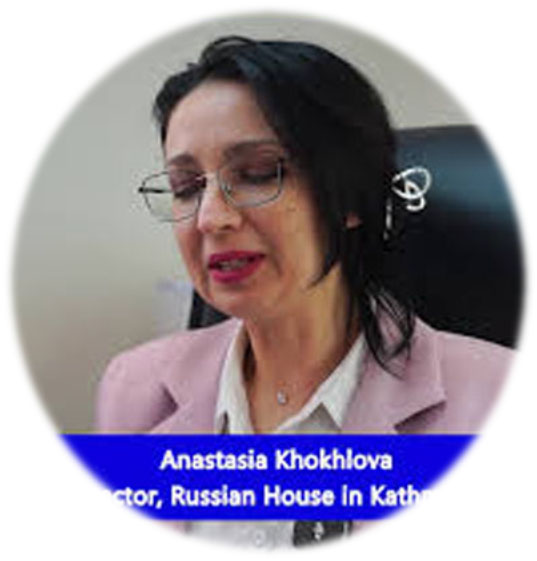
The main point of contact for cultural and educational cooperation between the two countries is Russian House in Kathmandu. Opened at Kamal Pokhari in 1993, it has become second home to those who are interested in learning about all things related to Russia. Dedicated towards the cultural and educational enhancement of the society, besides operating the scholarship programme and organizing various events in cultural sphere, Russian House offers a bundle of opportunities to the representatives of young generation, i.e. the Russian language and Music classes, cosy library with over 10,000 books in Nepalese, Russian and English and free wi-fi, new modern Cinema hall with regular free of charge film shows, Drama classes on the real stage starting from February, 2026 in collaboration with Sushila Arts Academy, and Art classes also coming soon.
Among our long standing partners there are Mitra Kunj – the Association of Russian and Soviet universities alumni, Nepal-Russian Friendship and Culture Association, Nepal Russia Science and Technology Society, Nepal Russia Art club, Nepal Russia Literary Society, Friends of RUDN, Nepal Academy of Fine Arts, ICOM Nepal, Nepal Film and Culture Academy, NASO, universities, colleges and schools and many other. Together we arrange all-scale cultural events, festivals, concerts, exhibitions and workshops in various fields of culture and education. The regular events that celebrate special days of Russia and Nepal are shared with both communities as a symbol of the strong and close-knit relationship between the two countries, and are open to the general public that believes in cultural diversity and the richness of art.
How do you evaluate the significance and impact of scholarship programs provided by the Russian government to Nepali students?
Russian higher education is rightfully top rated worldwide for its high quality standards. It is true that thousands of Nepalese have got higher education in Russia and USSR throughout the last six decades, and I am happy to acknowledge that many of our graduates have reached significant achievements in their corresponding professional areas, becoming high ranking officials, prominent businessmen and top level specialists in various fields. They continuously contribute into further development of Nepal and its bilateral contacts with Russia at all levels.
The well-established practice of allocating Russian governmental scholarships for Nepal has been successfully continuing for decades.
Now citizens of Nepal are also equally eligible to apply for Russian state scholarships to get the opportunity of free of charge studies under bachelors’, masters’ and post graduate programs at Russian state universities. All the selected applicants get the extra first year of the Russian language course at Russian universities with tuition free of charge. Now the quota allocated for Nepal comprises 40 scholarships annually, but due to the high demand we have traditionally been getting extra quota during the last years, allowing over 60 Nepalese per year to get higher education in Russia.
The application campaign for the upcoming academic year will be open from September, 2026, thus we invite all those who are interested in higher studies at Russian universities free of charge to learn more and submit applications at the official scholarship allocation programme website https://education-in-russia.com
In your view, how have Nepali students who studied in Russia under scholarship programs contributed to strengthening bilateral relations?
For nearly six decades, Mitra Kunj has stood as a remarkable symbol of enduring friendship between Nepal and Russia. Generations of graduates of Soviet and Russian institutions – doctors, engineers, businessmen and diplomats – played a vital role in fostering the development of Nepal, cultural dialogue, educational exchange, and people-to-people connections that form the foundation of our bilateral relations. Their sustained efforts in preserving shared values, promoting knowledge, and encouraging cooperation are deeply appreciated.
Its vivid sense of social responsibility, demonstrated through annual health camps, fundraising initiatives, and blood donation programs, stands as a true symbol of its dedication to the development of the Nepali community and public welfare, which makes me profoundly proud of the alumni of Russian universities.
There are numerous alumni of Russian universities who contributed into development of Nepal at various level, from rural to ministerial, i.e. our longstanding partner ex Minister of Environment, Science and Technology Ganesh Shah, former Ambassador of Nepal to Russia Dr. Jangab Chauhan, newly appointed Hon. Minister of Industry, Commerce and Supplies Mrs. Gauri Kumari Yadav and many many more outstanding representatives of various spheres.
What role have exchange visits of cultural groups between Nepal and Russia played in enhancing people-to-people connections?
That is a timely question, because just last year we celebrated the Centenary of Russian public diplomacy. And within the celebration here came Russian musicians and singers, and representatives of Nepali Mitra Kunj and Friendship associations went to Russia to participate in the large-scale International Public Diplomacy Forum.
Russian house in Kathmandu together with Sushila Arts Academy arranges annual concerts encouraging the youth to master classical ballet. Sushila Arts Academy biggest annual project called Rhythm and Soul is being traditionally carried out with our allover assistance and cooperation. This project is unique and really corresponds to cultural exchange, when Russian professional and internationally acknowledged dancers come to Nepal and perform together with Nepali. They also arrange workshops and master classes for the dance students.
This year the Rhythm and Soul will be dedicated to the 70-th anniversary of establishing the diplomatic relationship between Russia and Nepal.
What additional measures are needed to make cultural exchange programs—such as dance, music, and theatre group visits—more effective?
I suppose that we definitely need to encourage the regional administrations to promote the cultural diversity of various parts of our countries, which have a mesmerizing variety of art forms and traditions. I do believe that this might add even more color to the kaleidoscope of bilateral cultural representation and also promote tourism to far regions, contributing into their economic growth and development.
How have film screenings—Russian films in Nepal and Nepali films in Russia—contributed to deepening cultural understanding between the two nations?
Witnessing the growing popularity of cinema in Nepal and the dynamic development of local filmmaking, the film sector appears to be a promising area for cooperation. Thus, in 2025, through the Russian Cinema Fund, the Russian House in Kathmandu was supplied with modern cinema equipment (a DCP projector, professional acoustics, new seats, and a screen), becoming one of the best venues in the country, equipped on par with large commercial cinemas.
Recently Russian House has been proudly participating in Nepal International Film Festival (NIFF) with Russian Film Days, a special out-of-competition showcase presented in partnership with ROSKINO. This unique cultural exchange has brought contemporary Russian cinema to Nepali audiences free of charge.
This year marking the second consecutive year of collaboration between NIFF and ROSKINO, the program was designed to introduce audiences to the richness and diversity of modern Russian storytelling. Screenings took on April 3 to 6, 2026, at the Russian House in Kathmandu.
Also last year in November, the Russian House hosted the first International Horror Film Festival in Kathmandu, featuring 25 films from 15 countries, including the Russian folk horror film “Shaman.” The three-day festival attracted over 1,500 spectators and received extensive coverage in local media. We are planning to continue this practice together with our dear partners from Nepal Film and Cultural Academy this year.
In what ways have joint art exhibitions contributed to collaboration and creative exchange between artists of the two countries?
In 2025, the UNESCO Herald magazine published an article by Russian photo artist Denis Knyazev, Director General of the International Cultural Dialogue, about Nepalese wedding traditions. The article, “The Heart of Nepal: Rituals and Symbols of a Traditional Newar Wedding,” was created with the support of the Russian Society of Weddings (RZU) as part of the “Weddings of the Peoples of the World” project, aimed at strengthening cultural and traditional spiritual and moral values. The magazine is planned for distribution among local specialized organizations.
There are also painting exhibitions both by Russian and Nepali artists being organized at the premises of Russian House in Kathmandu. This year celebrations of 70th anniversary of diplomatic repations between Russaia and Nepal started with the art exhibition “With Love from Russia” (January 28 – February 6) – an international exposition of the Eurasian Art Union, comprising dozens of artworks by various artists. The opening ceremony was attended by the Chancellor of the Nepal Academy Mr. Bhupal Rai, and the founder of the Nepal Academy of Fine Arts Mr. Kiran Manandhar.
This year we’re looking forward to organizing an art exhibition jointly with Nepal-Russian Art Club and launch a children’s Art School at the Russian House in Kathmandu under the guidance of its president Mrs. Sushma Rajbhandari.
No doubt that strengthening cultural exchange with Nepal and actively promoting Russian culture through art, literature, and cinema is creating a lasting interest in Russian cultural heritage among young people and art community.
What is your observation regarding the interest and engagement of Russian society in Nepali literature, art, and cultural heritage?
Russian people are very much interested in Nepal and regard it as a fabulous country of snowy mountains, Hindu and Buddhist temples and colorful traditional festivals and visit Nepal mostly as tourists.
As for academic field, the main research activities in this area in Russia are carried out by the Center for Himalayan Studies of the Institute of Oriental Studies of the Russian Academy of Sciences and the Association of Himalayan and Tibetan Researchers. Both organizations maintain websites that provide information on expeditions, academic publications, and events in their main areas of work, primarily regular thematic conferences (https://ivran.ru/en ). Proceedings of these conferences are published in Russian (available at the Russian House library).
At St. Petersburg State University, Nepali is studied at the Faculty of Oriental Studies as part of the bachelor’s program “History of India and Nepal.” Language study begins in the second year. Nepali is taught by L.A. Streltsova, PhD, lecturer, and researcher in Nepali and literary studies, she also completed an internship at Tribhuvan University (2010).
One of the key figures in Nepali studies in Russia is Krishna Prakash Shrestha (1942–2022), an outstanding Nepali poet, translator, and journalist who became a “bridge” between the cultures of Nepal and Russia. He translated numerous works of Nepali literature (poetry and short stories) into Russian and Russian classics into Nepali.
Key achievements of his are popularization of Nepali literature: K.P. Shrestha translated the works of the great Nepali poet Lakshmi Prasad Devkota and other authors into Russian. Poetry translations: the collection “Minaev’s Journey to Nepal” (co-authored) presents his literary research, including his work on Nepali poetry. Bilateral exchange: in addition to translating Nepali literature into Russian, he translated Russian works into Nepali, facilitating mutual cultural enrichment. Dictionary: K.P. Shrestha is the author of a Russian-Nepali dictionary, a significant contribution to philology.
K.P. Shrestha’s daughter, Marina Shrestha, is actively working to systematize and preserve K.P. Shrestha’s legacy, including the initiative to erect a monument to the Nepali figure in Kathmandu.
What future plans are in place to further expand educational, academic, and student exchange cooperation between Nepal and Russia?
First of all we, the Russian House, are here to provide more opportunities to Nepali people who would like to know more about Russa, its language, culture, history and traditions.
Thus we are definitely going to continue the practice of providing Russian state scholarships for higher studies at Russian top state universities, and enlarging the number of those provided.
Likewise, we are open to cooperate with Nepali academic, cultural and educational institutions in arranging internationals events, and we would like to invite our prospect partners to step out with such initiatives.
We are also very much focused on youth cultural activities, starting from this year we have launched the Drama classes at big stage of the Russian House together with Sushila arts academy. We provide music classes in piano and would also introduce guitar if there is enough demand. And we are also planning to start Art classes to tach children drawing and painting soon.
Combined with our cultural and scientific programmes, discussions, film shows and exhibitions this would contribute into making Russian House a true informational and cultural hub, where one could come daily and find something interesting to do and take part in.
What opportunities do you see in using digital platforms (such as online film festivals, virtual exhibitions, and webinars) to further strengthen cultural ties between the two countries?
I personally believe that specialized digital platforms must be promoted wider because these days everything is available on Youtube and Chat GPT can provide you a list of links to any issue you request and translate any text into any language to make it comprehensible.
It is moreover important to avail people learn more and go deeper after they participate in some activities in person.
Also, digitalization is very much important part for our scholarship competition procedure, and now it is actually being carried almost completely online via education-in-russia.com platform.
Finally, on the occasion of the 70th anniversary of Nepal–Russia relations, what message would you like to convey to the people of Nepal, especially the younger generation?
Last year Russia celebrated the centenary of people-to-people diplomacy, arranging huge event in Moscow in October with participation of representatives from over 100 countries, of course including Nepal. This year Nepal and Russia celebrate the 70th anniversary of diplomatic relations. The two countries have been close friends for decades, and the transmission of the heritage of this relationship should be regarded as the priority. Thus, we are planning to celebrate this special date at a large scale by arranging various cultural events, enhancing exchanges and supporting mutual visits of representatives of art, educational and official delegations. Russia has always been a friend of Nepal and we are convinced that we have all the resources to continue and develop our people-to-people ties to the benefit of both nations.