



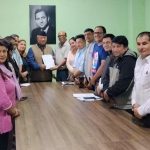


Kathmandu : Prime Minister KP Sharma Oli has said that treaties and agreements reached between Nepal and India are in the phase of review as per the report of the Eminent Persons’ Group (EPG) formed between the two countries.
In his address to the House of Representatives (HoR) today, the Prime Minister stated this. According to him, a feasibility study about the proposed Rasuwagadhi-Kathmandu railway project had been already completed on the initiation of the government and works relating to the proposed Birgunj-Kathmandu railway project had started.
As briefed by the prime minster to the lower house, the government enjoyed a profit of around Rs 6 billion due to provision of concession on customs duty in trade with Turkey.
“The government is being attacked over the tax issues,” he said, questioning who it was possible to ensure all basic facilities to the people free of cost without collecting taxes and receiving a subsidized loan. As he said, he paid tax for operating a bullock cart during the Panchayat system. The tax issue was unnecessarily rumoured.
It seemed some unusual while exercising a new practice, but the constitution had itself guaranteed the local level’s authority to raise taxes for the operation of local governments. The collection of taxes unnecessarily should neither be practiced nor entertained, but the habit of paying appropriate tax must be developed, he asserted.
He took the time to say that the government was committed to good governance and development in the country, adding the since the formation of the incumbent government, the arrangements of employees at all three levels were made through the ‘organisation and management’ system.
Enactments of laws regarding the allocation of resources among the governments of three levels and laws related to fundamental rights have been initiated, as told by the prime minister. “The House was unnecessarily obstructed following the constitution of the present government and how it is possible for the House to formulate the required laws on time.”
So far the Council of Ministers had approved to go with the 49 bills. The government has launched the school enrolment campaign since mid-April this year with an objective of bringing all school-age children to schools.
The government was accused of chanting the slogans of totalitarianism before its formal operation, the Prime Minister said, claiming that he had spent his entire life for the causes of democracy and its proliferation and promised to spend his future days same way. “This is the policy of our party as well; we do not need any kind of anarchy and won’t let it be also.”
He further insisted on the need of talks and dialogues and coordination and cooperation among the federal and province governments and the federal parliament and the State Assemblies. In his remarks about the Parliamentary Hearing Committee’s decision to disqualify the name recommended by the Constitutional Council for the appointment of Chief Justice, he said the Committee move should not be ridiculed as the Committee decided whatever it thought appropriate.
Talking about the Kanchanpur incident, he said in the beginning, the government was confident about police administrations’ right role in handling the case, but later a team from the Home Ministry was send there with the realisation that police role was not appropriate. The then police chief and chief district officer were replaced thereafter, he added.
He informed the house that the government had already announced to provide Rs one million to the victim’s family. “The government is sensitive over such issues, pledging a fair probe in the case and stern action against the guilty.” RSS
PM addresses lower house; says Nepal-India bilateral treaties in phase of review

You may also like

The Nepali Army installed a Bailey bridge at Devighat in just five days
Kathmandu. The Nepali Army has completed the installation of a Bailey bridge in the Devighat area of...

Preparations for Phased Protests Against Cuts to Public Welfare Advertising
Kathmandu. The ‘Print Media Preservation Task Force’—formed by the Kathmandu Chapter o...
If the allegations against the Home Minister are false, why are you silent about the ‘forgery’?
Kathmandu. Thousands of savers of about half a dozen cooperatives are asking the police for an inves...


Add Comment