






Kathmandu. There are many complaints about the problem of house restoration in the wards of Kathmandu Metropolitan City. They did not pay the rent by staying in the house. It has been months since Wahalwala was locked up. No rent, no end of people. No contact. Now what to do with this closed room? Complaints like these keep coming to the wards every day. However, other disputes also arise. Other disputes are less compared to house maintenance problems.
The Metropolitan Municipality has issued the Home Repossession Management Guideline 2079 to manage disputes related to housing. It has been arranged that an agreement should be made with the citizenship number, address, and terms of restoration of both parties. Both parties to the agreement will have to keep one copy and submit one copy to the ward office.
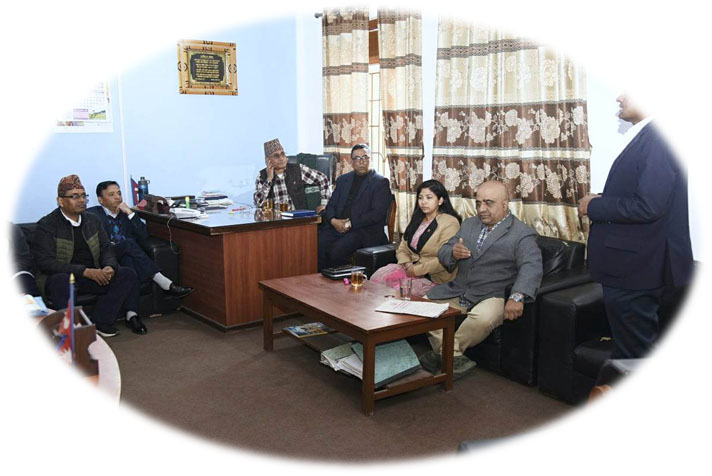
This situation of conflict was seen from the dialogue with the representatives and employees of the wards with the team led by the Deputy Chief and Coordinator of the Judicial Committee, Sunita Dangol, who went to observe the establishment of reconciliation centers in the wards. Complainants keep coming to the ward with problems such as transactions, narrow borders, window walls, fights after drinking alcohol, sewage, road problems, discord between husband and wife, and senior citizens not being allowed to eat.
There are two types of complaints. One through conciliation and the other through decision-making. Some complaints should be settled through conciliation. If conciliation is done in some complaints, the victims will suffer more. During the meeting and conversation, Dangol, deputy head and coordinator of the committee, said that reconciliation should be done when both sides win when reconciliation is done based on the nature of the incident. The ward-wise situation is known through on-site observation. This will help in formulating an effective operational plan for the Melmilap Kendra. He says.
Today wards no. 1, 6, and 31 have been observed. Among these, Ward 1 does not have its own building. It is narrow from where I am sitting now. There is a need to rent another place for the mediation center. The old building of Ward 6 needs to be demolished and a new one built. The building that is going to be moved now is new, but this building is not sufficient for the ward’s services. Therefore, this ward also has to rent a place to run the reconciliation center. Ward 31 will take about 1 month to move to a new building. Since the old building is narrow, there is no space to operate the center.
After looking at the situation, Deputy Chief Dangol said that the activation of the ward and women’s network is necessary to bring the center into operation immediately, whether from their own place or by renting it. Citizens should come to the ward with local disputes. It is the job of the people’s representatives to listen to their problems and solve them. We have to explain to the people that they should go to the ward and not to the police with disputes. Kush Dhakal, a member of the judicial committee and president of ward 29, says, “Complaints are no longer to the police. It should be given in the ward. Under the leadership of the deputy’s head, we have walked towards the same goal. Let’s establish and operate a reconciliation center in the ward.
Chairman of Ward 1, Bharat Lal Shrestha, says that the center will operate even if all the mechanisms of the ward are in place. Chairman of Ward 6, Bhuvan Lama, says that due to the lack of scientific methods related to land surveying, sometimes justice cannot be given even if one wants to. Chairman of Ward 31, Saroj Dhakal, says that the policy will be effectively implemented with the combination of infrastructure and human resources.
There have been no complaints of gender violence. There are many complaints about opening the room. Signs of fighting have been seen as the number of young people coming to the park has increased. The number of young people living together but not formalizing their marriage is increasing. The coordinators of the network, Rasala Tandukar, Gayatri Pudasaini, and Apsara Khanal, suggest that the controversy that may arise from the change of behavior in the city should be projected.
Vasant Acharya, head of the Law and Human Rights Department, said that gazettes have been sent to all wards so that the representatives and employees of the wards have the same information about the legal arrangements issued by the metropolis. o make the legal knowledge and practical aspects of reconciliation the same in all wards of the metropolis, capacity development programs have been arranged, and based on the agreement made with Nepal Law Campus, and one law facilitator has been arranged in each ward.



Add Comment