



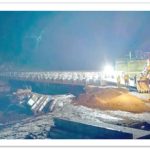
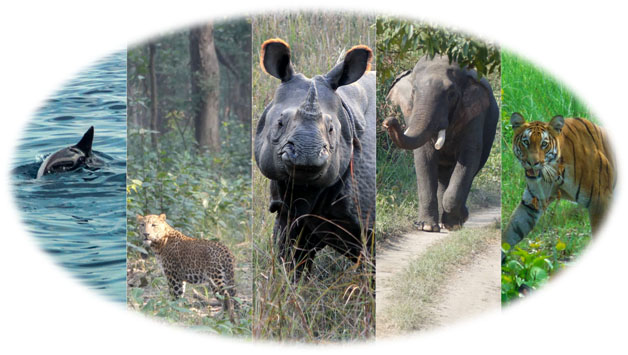
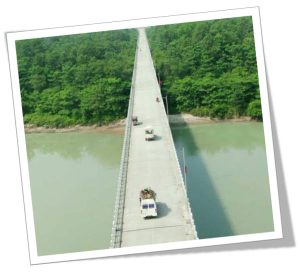
Bardiya is one of Nepal’s premier destinations for nature-based tourism. Bardiya National Park is among the largest national parks in the country. It is an excellent destination for those who want to see tigers, elephants, rhinoceroses, and crocodiles (gharial). The region offers a wealth of attractions, including the Karnali River—ideal for rafting and dolphin watching—and the scenic beauty of areas like Babai, Rajapur, Shanti Bazar, and Sankatti. A bridge directly connects the Karnali area to Tikapur, providing access to tranquil natural landscapes suitable for trekking and eco-tourism. Visitors can also experience Tharu village homestays and immerse themselves in local culture. Overall, Bardiya stands out as a region with immense potential for both wildlife and cultural tourism.
Geographically, Bardiya District is situated in the Terai region. It is bordered by Banke to the east, Kailali to the west, Surkhet to the north, and India (Uttar Pradesh) to the south. In terms of area and geography, it covers a total area of 2,025 square kilometers, with elevations ranging from 152 meters to 1,494 meters; its major rivers include the Karnali, Babai, and Geruwa. Flat Terai terrain, forest areas, and a river system primarily characterize Bardiya.
Statistically, based on the 2021 census, the total population stands at approximately 460,000, with a population density of 227 persons per square kilometer. Regarding ethnic composition, the Tharu community constitutes the largest group at 53 percent, while Hill communities—specifically Bahun and Chhetri—account for 20 to 25 percent of the population. Among the Brahmin and Chhetri groups, Chhetris account for 11.3 percent and Brahmins for 8.7 percent of the population. The remaining population consists of groups such as Dalits, Magars, Muslims, and Yadavs, albeit in smaller numbers. Regarding languages spoken, Tharu accounts for 52 percent and Nepali for 35 percent, while languages like Awadhi and Urdu are also in use to some extent.
In terms of religion, Hindus make up 94 percent of the population, followed by Muslims at 2.6 percent and Christians at 2.2 percent. Additionally, the Tharu community holds a distinct cultural prominence in the area. Key festivals include Maghi (the Tharu New Year), Dashain, and Tihar; the region is also renowned for its traditional dances, attire, and cuisine. Bardiya serves as a significant hub for Tharu culture.
Agriculture is the primary occupation, with paddy, wheat, and maize being the major crops; remittances from foreign employment also play a vital role. Furthermore, the overall literacy rate in Bardiya stands at approximately 76–77 percent, with data indicating specific rates of 79 percent in some local levels of Bardiya and 70 percent in Gulariya. There are dozens of government and private schools in each municipality; specifically, Barbardiya has 56 schools and Gulariya has 60.
Similarly, in terms of infrastructure, services are being expanded through district hospitals (Bardiya Hospital), health posts, primary health centers, and local levels. In terms of service programs, vaccination, maternal health, family planning programs are active, and new initiatives are being seen in the establishment of adolescent health service centers. However, serious challenges remain: a shortage of doctors and medical personnel, operational difficulties despite the establishment of facilities like ICUs and HDUs, and the persistent necessity to travel to Nepalgunj or Kathmandu for advanced treatment. While basic services are available, quality and specialized care are lacking.
Regarding the political landscape and administrative structure in the Bardiya district of Karnali Province, the region comprises two municipalities—Gulariya and Rajapur—along with six other municipalities and rural municipalities. In terms of local governance, services such as education, healthcare, the expansion of agricultural services, and citizen-facing functions—including birth registration and social security—are being delivered effectively and conveniently. However, the influence of political parties—such as the Congress, UML, and Maoist—has led to issues like unhealthy competition, delays in development projects, corruption, and implementation shortcomings. Unequal access to services in rural areas also remains a significant challenge.
Regarding political dynamics, the influence of ethnic groups—specifically the Tharu and Khas-Pahadi communities—is evident, much like in the Terai region, and the role of local leadership is crucial. Recently, there has been growing public interest in development-oriented politics in this region. However, while political activity is high, implementation and transparency remain challenging.
Regarding education, quality is poor despite efforts toward improvement; in healthcare, basic services are adequate but specialized care is lacking; and while political engagement is active, implementation is weak. It is a district full of potential that has not yet been fully developed. Access to education has expanded, yet quality improvements are needed; healthcare services have reached the people, but there is a shortage of skilled manpower; and while the political structure is sound, its implementation remains weak. – Note: The statistics are based on 2021 data; current figures for 2026 may differ. (Published in CityPost Daily on Jestha 2, 2083)




Add Comment