






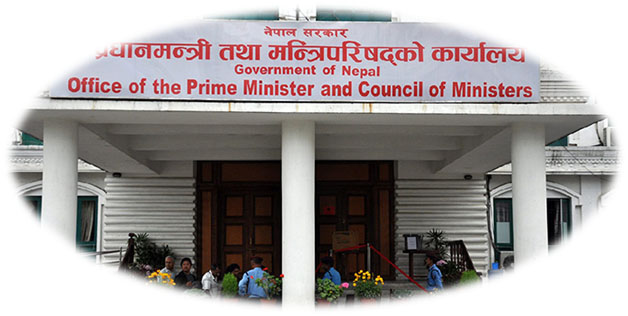
It is evident that, amidst the shifting political landscape in Nepal, public expectations have moved beyond a mere change of government to focus on a qualitative transformation of the governance system. Past experiences have taught the people a crucial lesson: a change in political alliances does not automatically translate into improvements in citizens’ daily lives. Achieving that requires fundamental reforms in state structures, service delivery systems, and operational approaches.
What contemporary Nepali society seeks is not merely grand slogans or ideals, but rather practical reforms, accessible services, and an equitable administration. First and foremost, the state needs to seriously understand the fundamental needs of ordinary citizens. A large segment of Nepal’s population still belongs to the middle and lower classes; for them, services that make daily life easier constitute the most significant form of politics. Access to education, healthcare security, employment opportunities, and ease of access to government services—unless these four pillars are robust, no political equation can be considered successful.
Regarding the education sector, it is not merely a means of acquiring knowledge but a fundamental basis for social transformation. However, access to quality education in Nepal remains unequal, and the gap between private and public schools is widening day by day. Depriving children from low-income families of the opportunity to receive quality education constitutes a long-term loss for the nation itself. Therefore, it is essential for the government to provide maximum support in the education sector. Priority must be given to initiatives such as free or subsidized education, the expansion of scholarship programs, the establishment of quality schools in rural areas, and the enhancement of teachers’ capabilities. It is also crucial to ensure equal access to higher education and create an environment that curbs the trend of migration abroad. Healthcare is another crucial sector in urgent need of reform. For the average citizen, medical treatment remains expensive and complicated. Overcrowding, a lack of equipment, and poor service quality in government hospitals drive many citizens toward private hospitals, further straining their financial resources. The government must ensure affordable, accessible, and quality healthcare for all. It is imperative to establish robust health centers, ensure the availability of essential medicines, provide skilled health personnel, and expand emergency services in every local level. The health insurance system must be made effective, and its reach extended to every village.
Attention must now be focused on the delivery of government services. Even today, citizens are compelled to make rounds of various offices for routine tasks. Whether it is obtaining a driver’s license at the transport office, accessing services at the airport, applying for a passport, or handling land-related matters at the Land Revenue Office—hassles, delays, and unnecessary procedural hurdles are evident everywhere. Even at municipal and ward offices, one often has to wait for hours just to access basic services. Services related to the Chief District Officer’s (CDO) office and security agencies are also not easily accessible to the general public. The root cause of these problems lies not only in management shortcomings but also in systemic dysfunction. A situation has yet to emerge where middle- and lower-class citizens can get their work done on time without personal connections or influence. Even when attempting to get things done according to the rules, unnecessary obstacles are created, leaving citizens frustrated.
In this context, the most serious issue is the system of bribery. Corruption, permeating every level from the grassroots to the highest echelons, has eroded public trust in the state. In many instances, a situation has been created where paying a bribe becomes a necessity to expedite tasks or facilitate processes. This is not merely a financial crime; it is also a social injustice that further marginalizes the poor and vulnerable. While the wealthy and well-connected easily access services, ordinary citizens are forced to endure hardship—a state of affairs that runs counter to democratic values and principles.
Therefore, the current government must prioritize controlling corruption above all else. Legal action alone is insufficient; systemic reform is essential. Service delivery can be streamlined through transparency, accountability, and the use of digital technology. Expanding online systems not only fosters transparency in service delivery but also reduces the potential for bribery by minimizing direct human interaction. For instance, fully digitizing services such as passport issuance, driver’s licensing, tax payment processes, and land registration would greatly benefit citizens.
Furthermore, reforms within the bureaucracy are essential. The image of the state is defined by the conduct, competence, and sense of responsibility of the employees working in service-providing agencies. A culture of treating citizens who come to avail services with respect must be cultivated. There must be a clear system in place to ensure staff accountability, incentivize high performers, and penalize those who engage in wrongdoing.
Political leadership also needs to clearly understand its role. Merely changing the government is not enough to win the public’s trust; integrity, long-term vision, and a people-centric approach are essential in policy formulation and implementation. Alliances between political parties should not be merely for the sake of power-sharing; they must aim to deliver concrete results in the public interest.
Citizen awareness is also a crucial aspect of this. Citizens themselves need to cultivate a culture of rejecting corruption, remaining conscious of their rights, and raising their voices against wrongdoing. Good governance is achievable only through collaboration between the state and the citizenry.
Ultimately, the shifting political equations in Nepal will hold no significance if they fail to improve the people’s standard of living. No political transformation can succeed without fulfilling four fundamental requirements: affordable education, accessible healthcare, streamlined government services, and a corruption-free system. For the current government, this represents not merely a challenge but also an opportunity—an opportunity to regain the public’s trust. Real change is possible in Nepal if the government pays timely attention to these issues and takes effective measures. Otherwise, political shifts will remain confined to paper, and public frustration will only deepen.




Add Comment