Japan is an archipelago located in the far eastern part of Asia. Stretching for nearly 2,500 miles from the Kuril Islands in the north to Formosa (Taiwan) in the south, the Japanese archipelago consists of more than 30,000 islands, covering a total area of approximately 173,786 square miles.
However, only around 600 of these islands are inhabited. Hokkaido, Honshu, Shikoku, and Kyushu are regarded as Japan’s four main islands. Japan is known in the Japanese language as both Nippon and Nihon. Interestingly, some Japanese people may hesitate when the country is simply referred to as “Japan.”
Among the four principal islands—Hokkaido, Honshu, Shikoku, and Kyushu—Honshu is the largest and can be regarded as the geographical and cultural center of the country. Much of its landscape is mountainous, and it is said that only about 17 percent of the land is suitable for cultivation. The mountainous regions contain significant deposits of coal, although iron is relatively scarce. The rivers flowing down from these mountains have strong currents, making the generation of hydroelectric power comparatively easy.
The mountains of Japan present a fascinating contrast: on one side, there are active and sometimes explosive volcanoes; on the other, there is an atmosphere of tranquility and extraordinary natural beauty. Japan is a beautiful country blessed with forests, rivers, mountains, and plains. It receives considerable rainfall and also experiences warm summers. In short, Japan can rightly be described as a remarkably beautiful and scenic country formed by a chain of islands.
Japan’s geographical circumstances have played a distinctive role in shaping its development and culture. Because Japan is an island nation, the Japanese have historically developed a strong sense of identity and unity. At the same time, they have generally shown an inclination to establish contact with people from other countries, learn from their achievements, and share their own knowledge and experiences.
The combination of collectivism, tolerance, national consciousness, a spirit of communication, creativity, and adaptability has generated a distinctive progressive energy among the Japanese people. On the one hand, Japanese people are often described as courageous, patient, simple, disciplined, and economical. On the other hand, they are also known for their love of art, appreciation of beauty, and skill in management and organization.
The traditional Japanese tea ceremony, particularly ocha or green tea culture, the celebration of the sakura or cherry blossoms, and sumo wrestling are among the cultural symbols strongly associated with Japan. Judo and kendo are also important traditional sports.
In more recent times, baseball has become extremely popular in Japan as well. These traditions and activities can be seen as reflections of important aspects of Japanese life. Japan is also among the countries that have never been permanently ruled by a foreign power. Other nations have certainly attempted to bring Japan under their control, but none ultimately succeeded.
For example, in the thirteenth century, the Mongols launched an invasion of Japan. Historical accounts describe a Mongol expedition against Kyushu. The invading forces arrived with a large fleet and tens of thousands of soldiers. They achieved some initial success, but a sudden and powerful storm struck the Mongol fleet. Many ships were destroyed and a large number of soldiers lost their lives. The Japanese regarded the event as a victory.
According to historical accounts, the Japanese, encouraged by this victory, subsequently killed Mongol envoys who had been sent to Japan.
The Mongols attempted another invasion in 1281, this time with a much larger military force. The Mongol forces again tried to bring Japan under their control. Fierce fighting between Mongol and Japanese forces continued for several days. Once again, however, a powerful storm struck the invading fleet and the Mongol campaign failed.
The Japanese came to regard these extraordinary storms as divine intervention. They called the phenomenon kamikaze, a term associated with “divine wind.” After the two unsuccessful invasions, the Mongols appear to have abandoned further attempts to conquer Japan.
Thus, following the failure of the Mongol invasions, Japan remained independent and was not brought under the permanent control of an external power. Japan’s history consequently retained a strong sense of independence and continuity. Perhaps for this reason, the Japanese people have traditionally regarded life, freedom, and national independence as deeply interconnected values.
Toward the end of the Second World War, Japan experienced devastating destruction. American air raids caused enormous damage to Japanese cities. On March 10, 1945, Tokyo was subjected to a massive bombing raid, causing widespread destruction and the deaths of more than 100,000 people according to commonly cited estimates.
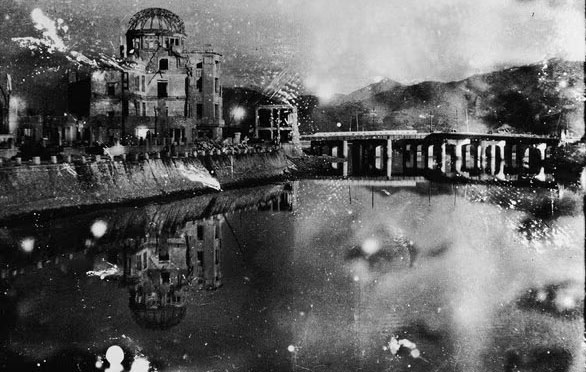
Similarly, on August 6, 1945, an atomic bomb was dropped on Hiroshima, killing tens of thousands of people. Three days later, on August 9, another atomic bomb was dropped on Nagasaki, again causing enormous loss of life and destruction.
Despite this unprecedented devastation, the Japanese people were not immediately prepared to surrender. Even in the absence of modern weapons, many were prepared to fight for their country with whatever means were available, including bamboo spears, and were willing to sacrifice their lives for Japan.
However, the Emperor of Japan ultimately accepted surrender in order to save his people and country from further destruction. His announcement reportedly shocked and saddened many Japanese people. The Emperor’s decision was made with the survival of the Japanese people and the nation in mind. Perhaps his central understanding was that the survival of the people and the country itself was the greatest victory that could be achieved under such circumstances.
Despite the immense destruction Japan suffered during the Second World War, the patience, endurance, discipline, and determination of the Japanese people enabled them to adapt rapidly to the new circumstances. They gradually rebuilt their country and moved forward on every possible path of development. The result is visible to the world today. Japan has emerged as one of the world’s most prosperous and highly developed nations. In the modern context, it would hardly be appropriate to associate Japan with the conventional image of an underdeveloped country.
Another remarkable feature of Japan is the continuity of its imperial institution. Japan is often described as a country where the same imperial dynasty has continued from ancient times into the present. Throughout history, not only Japan but the entire world has undergone enormous changes. Political systems have changed, societies have transformed, technology has advanced, and lifestyles have evolved. Yet Japan’s imperial institution has continued to occupy a place of significance within Japanese national life.
For many Japanese people, the imperial institution has served as a symbol of national continuity and identity. At different moments in the country’s history, particularly during periods of crisis or reconstruction, the institution has been associated with national unity and continuity.
There is also a traditional story that is sometimes told about Japan and Gautama Buddha. According to the story, while traveling by sea, Gautama Buddha once had to spend a night in Japan because it had become dark. Circumstances supposedly forced him to spend that night without food.
The following day, the local people learned that Buddha had arrived in their country and had spent the night hungry. They were deeply distressed and offered him great hospitality and respect.
When Buddha was preparing to continue his journey, he is said to have asked an elderly resident: “You have shown me great hospitality, and the time I have spent here will remain unforgettable to me. I am now continuing my journey. Is there anything I can do for you? If there is something within my power, tell me, and I will try to fulfill your wish.”
Hearing this, the elderly man reportedly became emotional, folded his hands, and replied: “We do not need anything, nor do we desire any material object. The fact that a person like you has set foot on our land has made our country feel like heaven. We are deeply blessed to have received your presence and blessings. However, there is one thing we ask of you: please do not tell others that you once came to Japan and had to spend a night here without food.” The old man is said to have bowed respectfully after making this request.
Many people today retell this story in different forms and with different interpretations. Whether or not the story is historically verifiable, it illustrates an idea that has often been associated with Japanese national character: a profound sense of hospitality, dignity, responsibility, and attachment to the reputation of one’s country.
Japan and Nepal: A Reflection
When we look at Japan’s history, development, national identity, and social discipline, we can understand how deeply a nation’s collective consciousness can influence its development. Japan was devastated by war, suffered enormous human losses, and faced the challenge of rebuilding almost from the ground up. Yet its people demonstrated patience, discipline, hard work, resilience, and a strong sense of national responsibility. They adapted to changing circumstances and transformed destruction into reconstruction and reconstruction into development.
Nepal, meanwhile, is also a country with an ancient civilization, rich culture, extraordinary natural beauty, and a proud history. Yet today, we often find ourselves causing pain and hardship to our own motherland through division, excessive individualism, and the pursuit of personal interests.
Japan has maintained symbols and institutions that have historically helped strengthen a sense of national continuity and identity. Nepal, by contrast, has struggled to create a comparable sense of common national purpose and unity.
We appear increasingly divided by “I” and “mine,” rather than united by a shared national vision. The lesson from Japan is not that Nepal should simply copy Japan. Every country has its own history, geography, culture, and political circumstances. But Japan’s experience does demonstrate the importance of national responsibility, social discipline, unity, resilience, respect for institutions, and a long-term commitment to the country.
A nation develops not only through roads, industries, technology, or economic resources. It develops when its people develop a collective determination to protect, rebuild, and advance their country. Perhaps this is the deeper lesson that Japan’s remarkable journey offers to Nepal: a nation becomes strong when its people place the long-term interests of the country above narrow personal interests and work together with patience, discipline, and a shared sense of responsibility.