







Kathmandu. There is a need to reduce air pollution to make Kathmandu a vibrant and habitable city. For this, subject experts are studying regionally. We incorporate the suggestions obtained from such studies into the policy and make pollution control programs. We design the program. We will implement it. Then our Kathmandu will be a livable city with clean air.
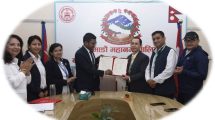
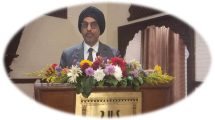
Navin Manandhar, a spokesperson of Kathmandu Metropolitan City, says, ‘Every person has a role to play in increasing pollution. No one takes responsibility that I am also guilty of pollution. Spokesman Manandhar said this in an interaction on clean air organized by the Environment Management Department with the education stakeholders (management committee, principal, teachers, and students) in the assembly hall of the metropolis today. Spokesman Manandhar emphasized that pollution can be reduced only if everyone takes responsibility.
A separate mechanism is needed to manage aspects such as waste management in school activities. The main study of principals and teachers is to provide training. Education consultant Reshu Aryal said the leaves inside the school must have been lit. Environmental methods can be used to manage such things rather than burning them. In this regard, the attention of the school administration is necessary. Basant Adhikari, the Chief Administrative Officer, emphasized promotional and promotional programs to reduce air pollution. In order to reduce pollution, a system should be developed to promote good practices and discourage wasteful tendencies. During the interaction, the coordinator of the education committee, Chinikaji Maharjan, said that the results would be better if the program which should be run as a campaign like air pollution control is carried out in the education sector. Similarly, Balkrishna Maharjan, the coordinator of the environment committee, said that the responsibility of making Kathmandu a livable city should be carried forward as a common resolution, despite all efforts.
Kathmandu’s air pollution is 10 times more than the standards set by the World Health Organization. Bhushan Tuladhar, head of the USAID Clean Air Project, said that air pollution is one of the top 5 causes of death while mentioning the situation shown by the study. Polluted air does not only cause problems for the lungs. The harmful chemicals in it have also shown the risk of cancer. Tuladhar says.
The program was organized with the aim of increasing participation by developing a common understanding among education stakeholders. The children who participated in the program shared their experiences of not being able to speak up. “Everybody says, ‘Let’s separate the garbage.'” They asked. Pesticides are also a cause of air pollution. Making their understanding clear, they said, “Otherwise why don’t you refuse?”
At the end of the interaction, through group discussion, the squeeze related to education sector reform and pollution control was extracted. Schools themselves should also work on pollution control. Environmental improvement should be included in the school improvement plan. A code of conduct for schools should be issued to make schools plastic-free, garbage-free, and drug-abuse-free. Along with this discussion, it has been concluded that focal teachers should be arranged to contact the air pollution issues in the school, and the theoretical subjects in the curriculum should be converted into practical skills.
The metropolis has planned to conduct a Happy Friday program in schools. On this day, students will be given skill-based and practical activities. This kind of training and learning should be made sustainable. Many have taken the training. The skill is known by many. But have the learned skills and knowledge helped to change behavior? Sanumaiya Maharjan, assistant director of the metropolis, says, “The metropolis has planned to promote sustainable and marketable skills.” The interaction was organized by the Environment Management Department and Public Health Organization (NFO). The metropolis has already completed an orientation program for public representatives, sanitation workers, city police, and vehicle drivers on the causes and control of air pollution.
These bodies did not adopt the methods of smoke control during the development work, causing suffering to the citizens, making life difficult, and making it difficult to conduct business. And pieces of plastic have also been found. Since they can easily reach from one place to another but cannot go out of the bowl-shaped valley, it has adversely affected public health and human health.
Air pollution is measured at PM 2.5. This means very fine particles of dust. Which are units smaller than the diameter of a human hair. Such particles directly affect human health. According to studies conducted at different times, the amount of air pollution in Kathmandu is more than the standard.-Chandramani Bhattarai


Add Comment